A woman I know started Wegovy last spring. Six months in, she’d lost about 38 pounds, looked objectively amazing from the neck down, and was miserable every time she passed a mirror. “My body looks 34,” she told me. “My face looks 50.”
This is the conversation nobody has in the prescribing appointment. It’s the one that happens in group texts and on Reddit threads at 2 a.m. And if you’ve noticed your cheeks looking flatter, your under-eyes looking deeper, or a weird new hollowness at your temples a few months into a GLP-1, it has a name now: Ozempic face.
Let’s talk about what it actually is, why it happens, who it hits hardest, and - the part nobody wants to say - what actually slows it down.
What “Ozempic face” actually is (and what it isn’t)

The term was coined in 2023 by a New York dermatologist named Dr. Paul Jarrod Frank, who started seeing a wave of patients with a specific constellation of changes: sunken cheeks, deeper nasolabial folds, hollowed temples, loose skin along the jaw and neck, more prominent cheekbones, and tear troughs that seemed to appear overnight.
Here’s the part that matters: it is not a direct side effect of the medication. Plastic surgeons have been documenting the same changes in bariatric surgery patients for decades. Anyone who loses a significant amount of weight quickly (by any mechanism) can end up with the same face. GLP-1s didn’t create this phenomenon. They just made it accessible to a much wider group of people, which is why it’s suddenly everywhere.
What is uniquely GLP-1-ish is the speed. People on these medications can lose 15 to 22% of their body weight in 12 to 18 months - a velocity of fat loss that skin simply doesn’t have time to adapt to.
The three things actually happening under your skin
Your face isn’t just thinner. It’s aging, in a specific physiological way. Here’s what dermatology research is piecing together.
1. The fat pads are deflating.
The subcutaneous fat in your cheeks, temples, and around your eyes is load-bearing, aesthetically speaking. It’s what plumps your face and keeps skin lifted against gravity. When those pads shrink quickly, skin that used to drape smoothly over them suddenly has more surface area than it needs - which reads as sagging and hollowing. You can’t spot-preserve facial fat during weight loss. Your face shrinks with everything else.
2. Collagen and elastin are taking a hit.
Collagen gives skin structure; elastin gives it snap-back. Research shows that rapid weight loss lowers levels of both proteins in the skin, which is why skin doesn’t neatly retract over the smaller frame underneath. And we’re already losing collagen naturally - roughly 1% per year after age 30. So a 47-year-old on a GLP-1 is fighting a 17-year collagen deficit and rapid fat loss at the same time.
3. There’s an oxidative stress component, too.
This one is newer. A 2025 mechanistic analysis published in the academic literature found that rapid fat loss disrupts the signaling environment that normally protects skin fibroblasts (the cells that make collagen), and raises reactive oxygen species in the dermis. Translation: even beyond the mechanical “there’s less fat there” effect, your skin cells are under cellular-level stress during rapid weight loss, which accelerates breakdown of the collagen you still have.
Why it’s hitting women over 40 the hardest
If it feels like every friend over 40 on a GLP-1 is suddenly worrying about her face while her 28-year-old cousin looks fine - that’s not in your head.
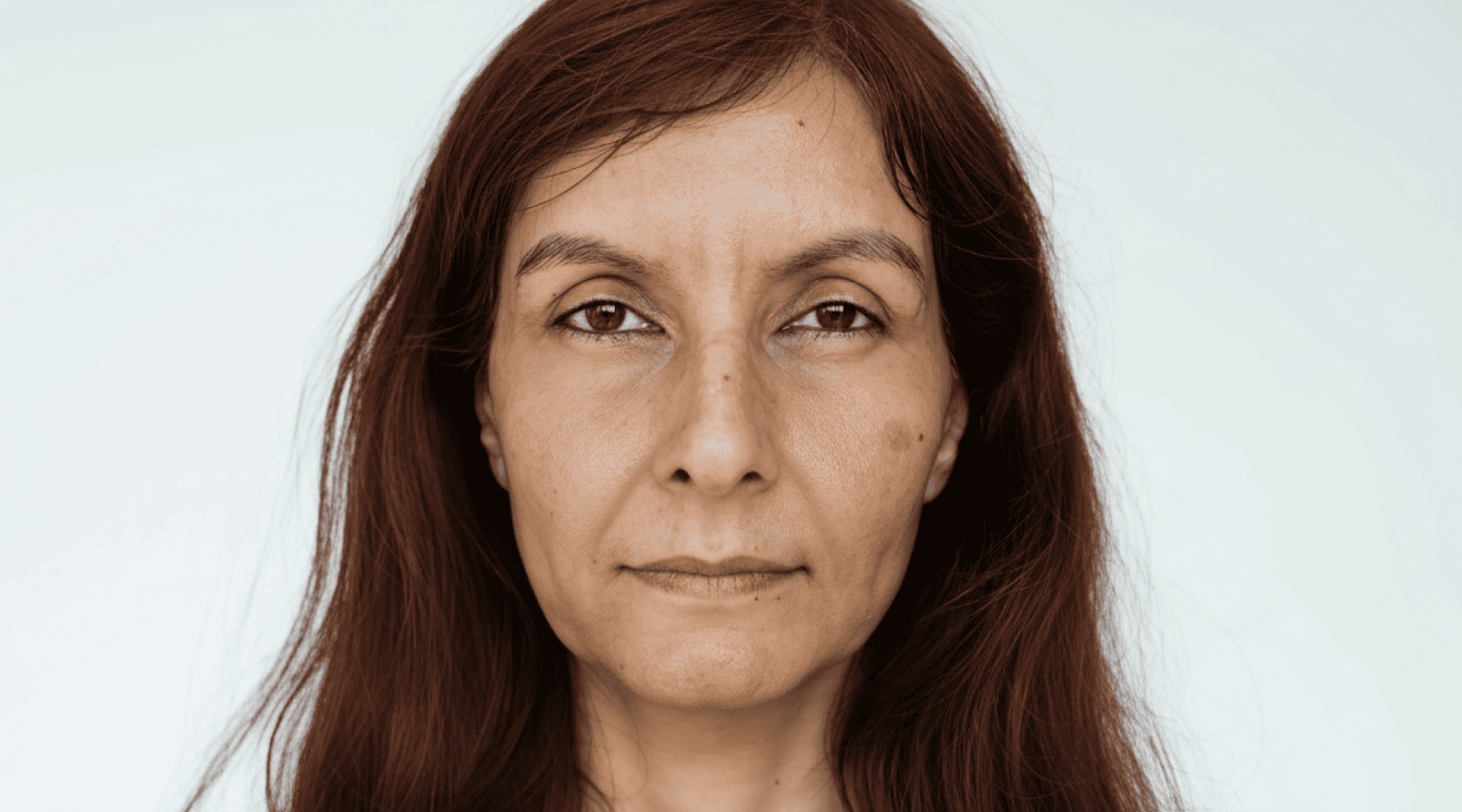
Three things stack. First, perimenopausal and postmenopausal estrogen decline accelerates collagen loss on its own. Second, women tend to carry more of their facial fullness in subcutaneous fat that deflates with weight loss. Third, women are disproportionately the ones losing large amounts of weight on these medications - meaning the percentage drop in facial volume is often bigger.
If you’re 44 and losing 20% of your body weight in a year, your face is doing something it would normally do over a decade, compressed into months.
What actually slows it down (ranked, honestly)
1. Slow the weight loss if you can.
Endocrinologists and dermatologists largely agree: 1 to 2 pounds per week is the range where skin has a fighting chance to adapt. If you’re losing faster than that, talk to your prescriber about staying on a lower dose longer, or extending the time between titrations. Slower loss equals gentler facial change. This is the single biggest prevention lever you have.
2. Protect muscle and feed your collagen.
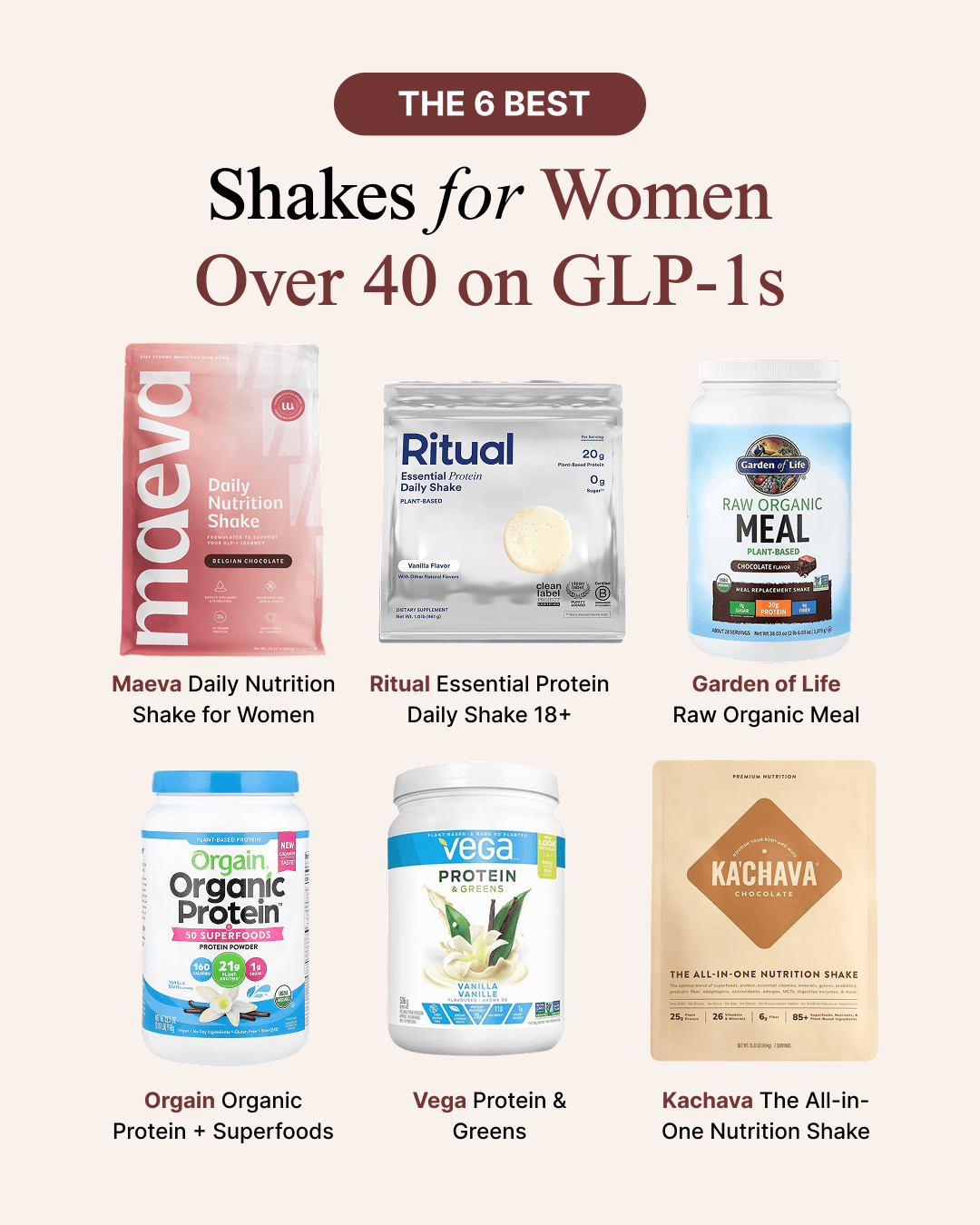
You can’t separate skin quality from what you’re eating. Protein provides the amino acids your body uses to build collagen - specifically proline, glycine, and lysine. Aim for 1.2 to 1.6 grams per kilogram of body weight per day while you’re actively losing. A high-protein shake specifically formulated for people on GLP-1s makes this genuinely easier, especially when appetite is suppressed and you’re struggling to hit those numbers from food alone. And hydrate - dermis function depends on it.
3. Lift heavy things.
Strength training does two things at once: it helps preserve lean mass (you have more than 20 facial muscles), and it signals your body to hold onto muscle rather than burn it during a calorie deficit. Better body composition tends to mean better facial contour.
4. Build a real skincare routine, now.
If you don’t already have one, start before the changes show. Dermatologists recommend a core stack: daily broad-spectrum SPF, a topical retinoid at night (stimulates collagen), a vitamin C serum in the morning (antioxidant, protects collagen), and peptides or hyaluronic acid for hydration. None of this replaces lost fat, but all of it meaningfully improves skin quality — which is often what’s actually bothering you when you look in the mirror.
5. Know the procedural options - and when they make sense.
If facial changes are significant and affecting your quality of life, a board-certified dermatologist can walk you through hyaluronic acid fillers (immediate volume, last 12–18 months), biostimulatory fillers like Sculptra (build your own collagen over 2–3 months, last 2+ years), radiofrequency skin tightening, PRP, and microneedling. These are real options. They are not “vanity.” But they should come from a dermatologist, not a Groupon.
The honest part nobody says

Facial fat loss doesn’t reverse on its own. If you keep the weight off, the face stays. You can improve skin quality substantially with good habits and good dermatology. You can restore volume with procedures. But you cannot unsee what’s happened, and you shouldn’t plan around a spontaneous recovery that isn’t coming.
The tradeoff most women I’ve talked to end up making, once they really sit with it: a slightly older-looking face in exchange for a significantly healthier body, longer life expectancy, less joint pain, and clothes that fit. For most people, that’s a trade they’d make again.
Just go in with your eyes open. And maybe start the retinoid now.
This article is for informational and educational purposes only and is not medical advice. Please consult your healthcare provider or a board-certified dermatologist before starting or changing any medication, supplement, or skincare regimen.
Sources
“‘Ozempic Face’: An Emerging Drug-Related Aesthetic Concern,” PMC, 2024. https://pmc.ncbi.nlm.nih.gov/articles/PMC12346945/
Cleveland Clinic, “‘Ozempic Face’: What It Is and How to Avoid It.” https://health.clevelandclinic.org/ozempic-face
1st Optimal, “Ozempic Face: Causes, Prevention and Treatment (2026).” https://1stoptimal.com/ozempic-face/
Medical News Today, “What is ‘Ozempic Face’? Before and After.” https://www.medicalnewstoday.com/articles/ozempic-face
Associates in Dermatology (SteppieMD), “Ozempic Face: Managing Skin Sag.” https://www.dermorlando.com/blog/ozempic-face-managing-skin-sag
1st Optimal (collagen declines approximately 1% per year after age 30). https://1stoptimal.com/ozempic-face/
“GLP-1RA and the possible skin aging,” PMC, 2025. https://pmc.ncbi.nlm.nih.gov/articles/PMC12370548/
Desert Bloom Skincare, “Ozempic Face Aging: How to Restore Your Skin’s Quality.” https://www.desertbloomskincare.com/reversing-ozempic-face-aging/
Cleveland Clinic (same as source 2) — recommendation of 1–2 pounds per week. https://health.clevelandclinic.org/ozempic-face
Stanford Medicine, “How much protein should we really be eating? Five things to know,” 2026. https://med.stanford.edu/news/insights/2026/03/how-much-protein.html
Hinge Health, “What Is Ozempic Face? Causes and How to Manage It.” https://www.hingehealth.com/resources/articles/ozempic-face/
Forefront Dermatology, “Fixing ‘Ozempic Face’: Addressing Facial Volume Loss the Healthy Way.” https://forefrontdermatology.com/fixing-ozempic-face-addressing-facial-volume-loss-the-healthy-way/
1st Optimal (treatment options: HA fillers, biostimulators, RF, PRP, microneedling). https://1stoptimal.com/ozempic-face/
Desert Bloom Skincare (fat loss is as permanent as the weight loss itself). https://www.desertbloomskincare.com/reversing-ozempic-face-aging/